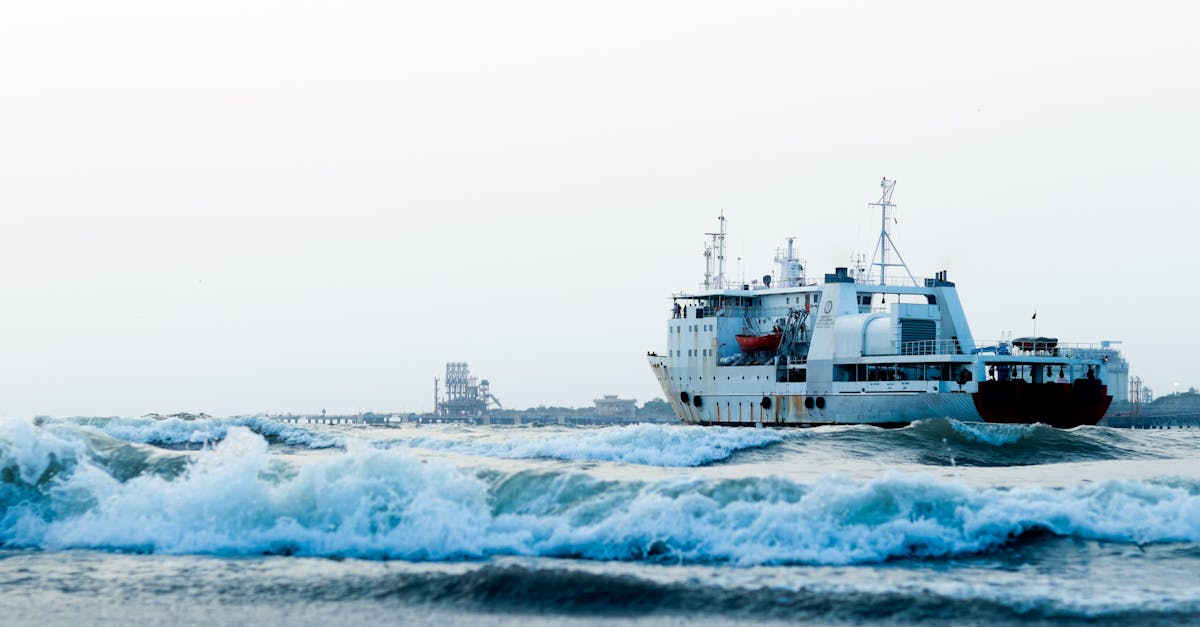
There is an old colonial-era myth that Indians traditionally feared the sea — that crossing the “black water” was taboo and that the subcontinent turned its back on the ocean. The historical record tells a very different story. For more than two thousand years, Indian sailors, merchants and shipbuilders made the Indian Ocean one of the busiest and most lucrative trade arteries on Earth, linking the Roman Mediterranean to the ports of China and carrying Indian goods and ideas across half the world.
The key to it all was the wind.
The secret of the monsoon
The Indian Ocean has a remarkable feature that made long-distance sailing predictable: the monsoon wind system. For roughly half the year the winds blow steadily in one direction, and for the other half they reverse. A sailor who understood this rhythm could ride the winds eastward or westward across open water and return months later when the winds turned — without hugging the coast the whole way.
Indian and Arab navigators mastered these patterns early. By timing voyages to the monsoon, ships could cross the Arabian Sea or the Bay of Bengal with confidence, slashing journey times and opening direct routes between distant ports. This knowledge transformed the ocean from a barrier into a highway, and it underpinned centuries of maritime commerce.
Trade with Rome and the west
One of the best-documented chapters of this story is India’s trade with the Roman world in the first few centuries CE. A remarkable Greek text known as the Periplus of the Erythraean Sea — a kind of merchant’s handbook written in the first century CE — lists the ports of the Indian coast, the goods to be found at each, and the best times to sail. It is one of our richest windows into ancient Indian Ocean trade.
The goods flowing west were luxuries the Mediterranean craved: pepper and other spices, fine Indian cottons and muslins, pearls, ivory, semi-precious stones and aromatic woods. In return came Roman gold and silver coin, wine, glassware and certain metals. The trade was so vast that Roman writers grumbled about the empire’s wealth draining eastward, and large hoards of Roman coins unearthed in southern India confirm just how much treasure crossed the sea to pay for Indian goods. Bustling ports on the Indian coast handled this commerce, growing wealthy as gateways between the subcontinent and the west.
Trade with Southeast Asia and China
If the western trade brought gold, the eastern trade spread culture. Across the Bay of Bengal, Indian merchants sailed to the lands they called Suvarnabhumi and Suvarnadvipa — the “land and island of gold,” covering much of mainland and island Southeast Asia. There they exchanged textiles and goods for spices, aromatics, gold and forest products, before the longer reach toward the markets of China.
This eastern trade had a profound cultural dimension. Over centuries, Indian religious and political ideas, scripts, art and architecture spread across Southeast Asia — not by conquest but largely through trade, travel and emulation. The result is visible to this day in the Hindu and Buddhist monuments of the region, from the great temple complexes of Cambodia and Java to the Sanskrit-derived names of cities and kingdoms. Tamil merchant guilds, in particular, operated far-flung trading networks across the eastern seas, establishing communities at ports across the Malay Peninsula, Sumatra and beyond.
Indian ports and ships
This maritime world depended on a string of busy ports around the Indian coast. On the western seaboard, harbours handled the trade with Arabia, Persia and the Roman world; on the eastern, ports such as the great Tamil harbour towns connected the subcontinent to Southeast Asia and China. These were cosmopolitan places, where merchants of many origins mingled, and where goods were warehoused, taxed and transshipped.
We know less than we would like about ancient Indian ships themselves, because few physical remains survive and the descriptions are scattered. Inscriptions and texts refer to seagoing vessels of various kinds, and later sources mention large timber ships capable of open-ocean voyages. Indian shipbuilders are known to have used techniques such as “stitched” plank construction, in which planks were sewn together with cordage rather than nailed — a method that produced flexible, durable hulls well suited to ocean swells. Combined with monsoon navigation and knowledge of the stars, these ships carried Indian commerce across thousands of kilometres of open water.
The merchant networks behind it all
Maritime trade on this scale was not the work of lone adventurers but of organised networks. Merchant guilds pooled capital, shared risk and maintained agents in distant ports. Some of the southern Indian guilds were powerful, long-lived institutions that operated across the seas for generations, leaving inscriptions as far afield as Sumatra. Temples, too, played an economic role, accumulating wealth, financing trade and coordinating craftspeople.
This institutional sophistication is part of why Indian maritime trade was so resilient. Even as empires rose and fell on land, the trading networks adapted and endured, kept alive by merchants whose knowledge of winds, ports and markets passed down through generations.
A two-way exchange of culture
It is tempting to think of trade as merely the movement of goods, but the Indian Ocean carried far more. Religions travelled the sea lanes — Buddhism and later Hinduism spread eastward, while Indian Ocean ports later became gateways for other faiths arriving from the west. Mathematical and astronomical ideas, crafts, foods and languages all moved with the ships. The ocean was, in effect, a vast conversation between civilisations, and India sat at its centre for the better part of two millennia.
Why the maritime story matters
The history of India’s maritime trade overturns the lazy assumption that the subcontinent was inward-looking. For more than two thousand years, Indian sailors and merchants harnessed the monsoon to build one of the world’s great commercial systems, exchanging spices and textiles for gold and ideas, and spreading Indian culture across an ocean that bears the country’s name. The Indian Ocean was not a frontier that India feared but a highway it helped to master — a reminder that the subcontinent’s history has always been written as much on the water as on the land.
Sources
- The Periplus of the Erythraean Sea, as discussed in scholarly translations and surveys
- Encyclopaedia Britannica, “Indian Ocean trade” and “monsoon” (britannica.com)
- World History Encyclopedia, “Indian Ocean Trade” and “Trade in Ancient India” (worldhistory.org)
- Hermann Kulke et al., Nagapattinam to Suvarnadwipa (ISEAS), on Tamil maritime networks


Comments