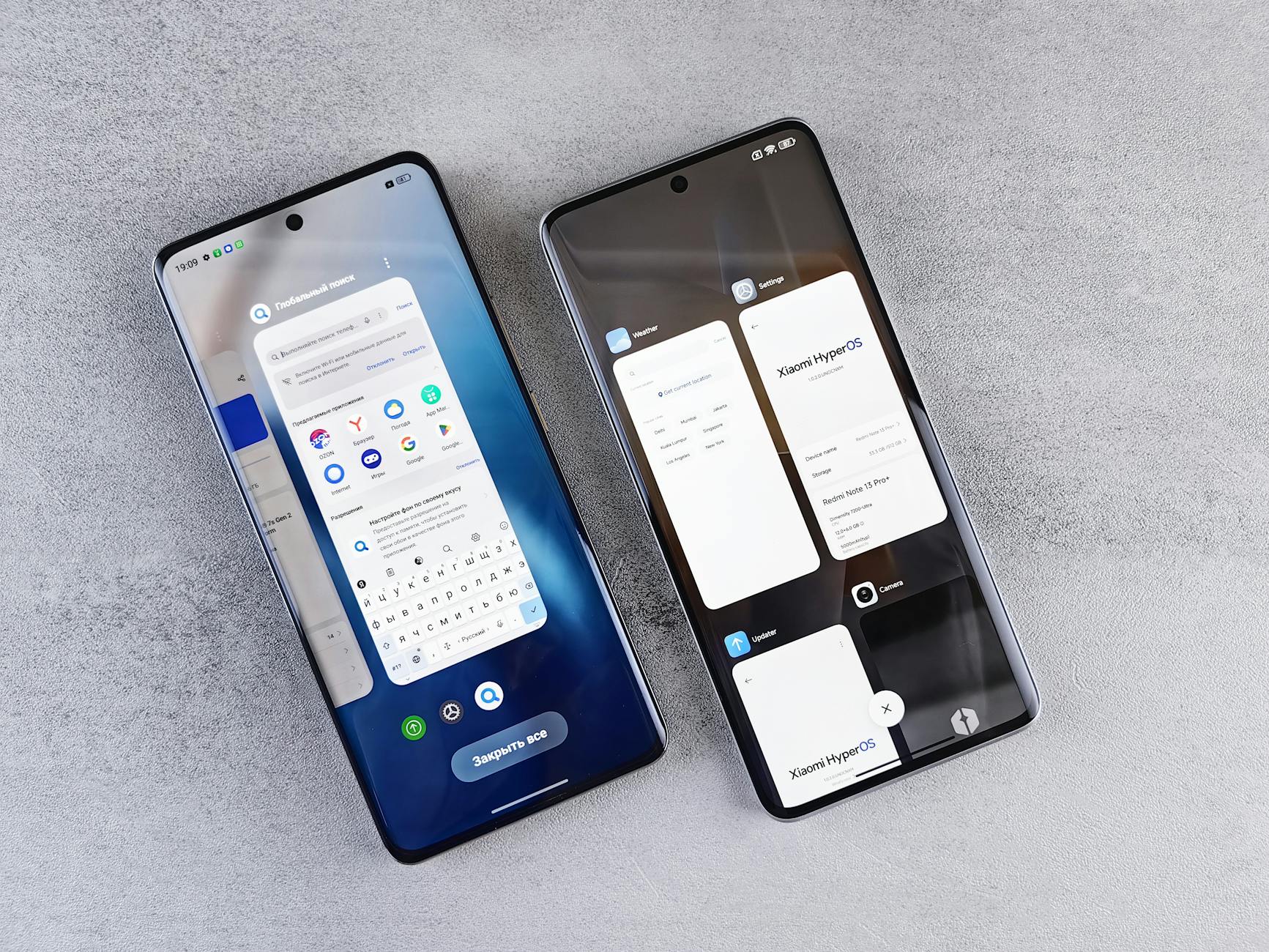
This year, both Apple and Samsung decided their phones should look like glass. iOS 26 brought Liquid Glass; One UI 8.5 brought transparent blur and floating elements. On the surface, they’re chasing the same aesthetic. Dig in, though, and the two updates reveal very different beliefs about what a phone’s software should do — and who it’s for. Here’s how they stack up.
Design: same mood, different execution
Apple’s Liquid Glass is the more radical swing — its first major redesign since iOS 7, with translucency pushed across icons, menus, controls, and a new “Clear” theme that makes the Home Screen almost see-through. It’s bold, and it’s been divisive precisely because it commits so hard.
Samsung’s One UI 8.5 is more restrained: glassy blur effects, floating elements, and redesigned navigation bars, but layered on top of One UI’s familiar, reach-friendly layout. It refreshes rather than reinvents.
Takeaway: Apple is making a statement; Samsung is polishing a known quantity.
Customization: Samsung still wins
This isn’t close. One UI 8.5 lets you add, delete, move, and resize Quick Panel items, reflow wallpapers intelligently, and mask apps with Privacy Display. Samsung’s whole philosophy is “make it yours.”
iOS 26 loosens up a little — more Lock Screen flexibility, the Clear theme — but Apple still prioritizes a consistent, curated look over deep tinkering.
Takeaway: If you love configuring every corner, Samsung is your platform.
AI: assistants pointed in different directions
Both lean hard on AI, but the flavor differs:
- iOS 26 / Apple Intelligence: on-device Live Translation, Genmoji merging, Visual Intelligence on screenshots, and a framework so third-party apps can plug in — with ChatGPT as the outside brain when needed.
- One UI 8.5 / Galaxy AI: Photo Assist editing, Creative Studio for generated wallpapers and stickers, AI call screening, Audio Eraser, and a Bixby that now folds in Perplexity AI.
Takeaway: Apple emphasizes privacy-first, on-device actions; Samsung emphasizes creative, generative tools — and is more willing to partner out.
Messaging: the gap finally narrows
The most consequential shared change is RCS. iOS 26.5 added end-to-end encrypted RCS between iPhone and Android, and Samsung’s Quick Share now supports AirDrop. The two ecosystems are, slowly, becoming less hostile to each other. Cross-platform texting and file sharing are better than they’ve ever been.
Long-term support: the real dividing line
Here’s where philosophy becomes practical. Samsung excluded its 2022 flagships (S22, Z Fold 4, Z Flip 4) from One UI 8.5’s features, dropping them to security-only updates. Apple, meanwhile, kept feeding features to phones as old as 2019 with iOS 26.
Takeaway: If longevity matters — getting new features for years — Apple’s track record this cycle looks stronger.
So which is “better”?
It depends on what you value:
- Choose iOS 26 if you want a daring redesign, privacy-first AI, and the longest feature support.
- Choose One UI 8.5 if you want deep customization, generative AI creative tools, and a familiar, reach-friendly interface.
The fun twist of 2026 is that both companies arrived at “glass” from opposite directions — Apple by reinventing, Samsung by refining. You’re not really choosing a look anymore. You’re choosing a philosophy.

Comments